Anchoring Assignments in the Lived Human Experience
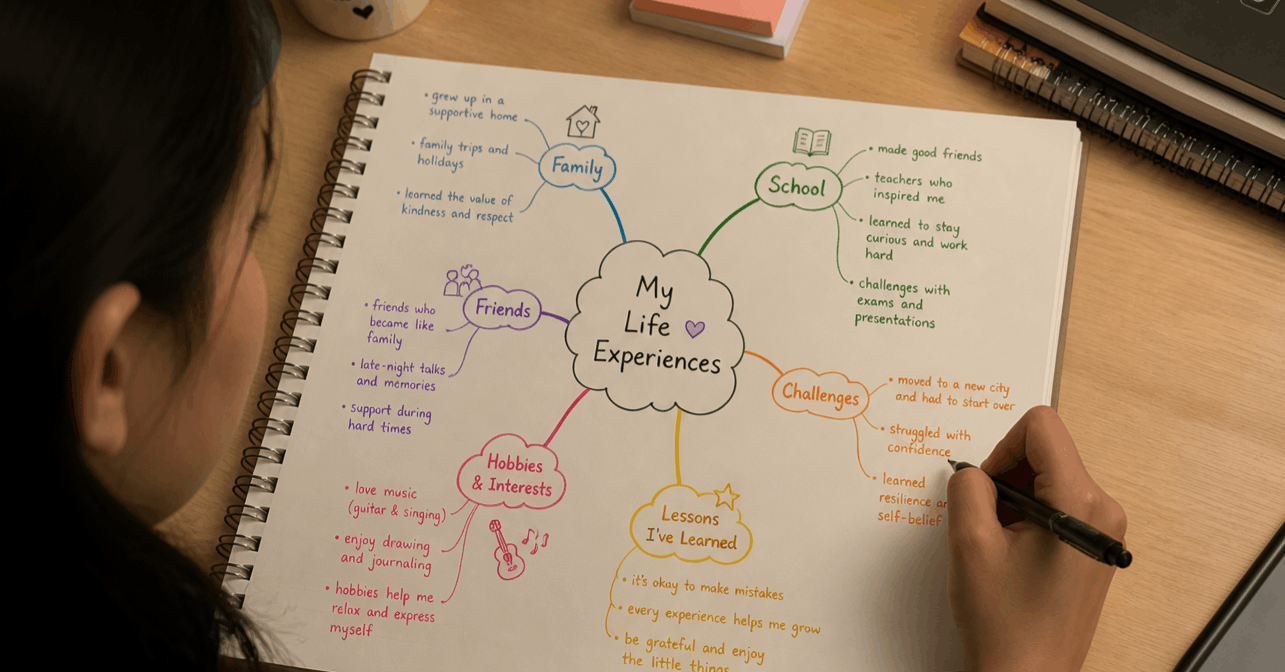
Generative artificial intelligence cannot draw on personal narrative, local context, or lived history the way a student can. This gives assignments anchored in personal experience a real advantage. It cannot walk through a specific local park, experience a family tradition, or feel the unique emotional currents of a classroom Socratic seminar. When assignments are generic and abstract, such as ‘summarize the causes of the American Revolution’, they are incredibly easy to offload to AI. But when assignments are anchored in the vivid, personal details of the student’s own life, copy-pasting is rendered completely ineffective.
Anchoring work in the lived experience begins with how we structure classroom conversations and assignments. Educators can actively leverage a powerful, student-facing discourse strategy popularized by learning strategists: ‘I don’t know, but it reminds me of…’ This simple prompt acts as a critical bridge. When a student is hesitant to answer a complex question for fear of being wrong or ridiculed, this phrase gives them a safe, low-stakes doorway to connect the academic concept to their personal history. Even if their initial connection is slightly off, the transition creates a strong neural sensory pathway in the brain, providing a memorable cognitive link that allows the teacher to gently guide them back to the correct conceptual framework.
In written work, this means requiring students to weave their own perspectives, values, and localized knowledge into core curriculum standards. If students are analyzing a scientific concept, they can be asked to observe its application in their own kitchen, or connect a mathematical percentage problem to their real-life grocery budget. By making the lived human experience a required element of the grading rubric, teachers ensure that the student remains the central creator of the work. AI can still act as a highly effective brainstorming partner, helping the student organize their thoughts, but the critical substance of the submission remains uniquely human.
Furthermore, centering assignments on the lived experience answers the age-old teenage question: ‘Why are we doing this? What does this have to do with my real life?’ When students see a direct, visible correlation between their coursework and their personal identity, their emotional buy-in increases. They no longer view assignments as transactional worksheets to get through, but as valuable opportunities to invest in themselves, build self-awareness, and celebrate their growth. Anchoring our expectations in humanity ensures that school remains a deeply personal, meaningful journey of self-development that no technology can replicate.
Administrators should encourage departments to audit their current curriculum through the lens of lived experience. We must ask ourselves: How often are we allowing students to share their personal stories, and how often are we requiring abstract, impersonal outputs? By redesigning our assessments to value the student’s unique voice and localized context, we protect their cognitive development and build an inclusive, culturally responsive learning environment. We teach students that their lives, communities, and personal perspectives are the most valuable assets they possess, ensuring they remain the active, central authors of their learning.
NEXT STEPS AND RESOURCES
Watch the Session 3 video presentation, ‘Designing Assignments That Reveal Learning,’ on the Illuminate XR YouTube channel and get in touch with the IXR team at illuminatexr.com/handbook to schedule custom professional development workshops for your staff. Contact us to equip your teachers with actionable strategies to reveal student thinking.
Traditional algorithmic detectors fail because they attempt to measure statistical patterns in text rather than the depth of human self-reflection. When generative artificial intelligence first flooded classrooms, school districts rushed…
Metacognitive signals and verbal defenses of student work are incredibly valuable, but they easily vanish if they do not have a dedicated home. A student writes, ‘I changed my evidence…
Teachers who spend their evenings running student essays through automated detectors are fighting an exhausting and losing battle. In a rush for efficiency, we are facing student disengagement and playing…
Valuing active student thinking should not mean transforming every classroom reflection into a graded checklist. In an educational system that has been transactionally motivated by points, letter grades, and report…